
The Welsh Corgi Club of NSW provides accurate and up-to-date information on the breed standards for both Cardigan and Pembroke Corgis.
Although they share the name “Corgi” and some family resemblance, the Cardigan Welsh Corgi and the Pembroke Welsh Corgi are two distinct breeds with different histories, characteristics, and genetics.
At first glance, they can look quite similar — but they are two separate breeds, each with its own history, build, and personality.
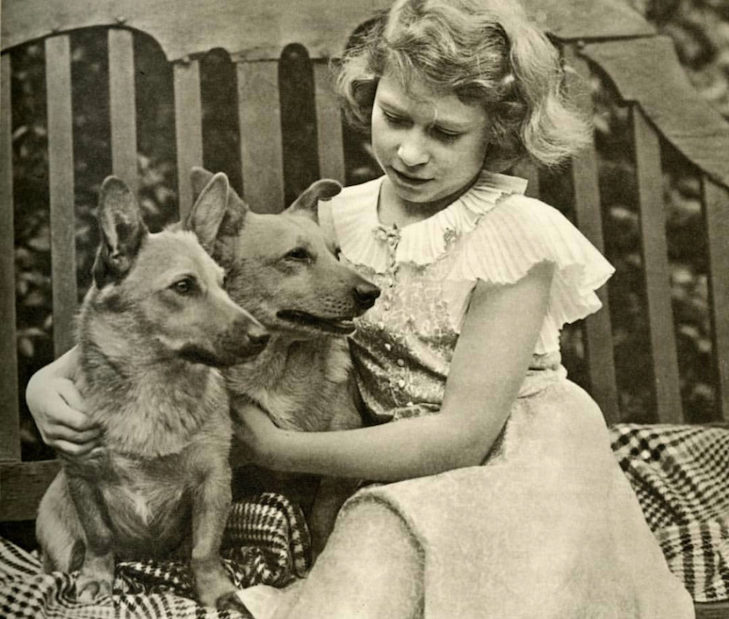
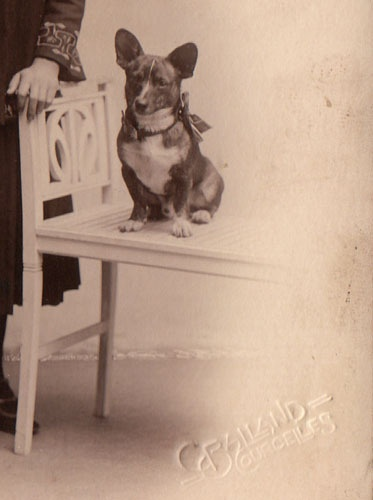
The word “corgi”, originally “kergie”, comes from ancient Celtic for “dog.” Historians believe that the earliest corgis were brought from Central Europe to Wales by the Celts during their mass migrations some 3,000 years ago. What we can say with certainty is that by around 1,000 years ago, corgis were already driving Welsh herds across the rugged countryside — earning their place as hardworking and loyal companions. The Cardigan Welsh Corgi is the older of the two breeds, whose ancestors likely came to Wales with the Celts, who brought with them small, long-bodied working dogs descended from the Teckel (Dachshund) family. This heritage explains the Cardigan’s long, low build and sturdy bone, designed for herding cattle and working on rough terrain.
The Pembroke Welsh Corgi, on the other hand, is thought to be a more recent arrival, developed around the 10th century. They are believed to have descended from Spitz-type dogs brought to Wales by Flemish weavers who settled in Pembrokeshire. This gave the Pembroke its more fox-like face, lighter bone, and characteristic Spitz features.
Genetic Background
The Cardigan’s link to the Teckel group contributes to its longer body, heavier bone, rounded ears, and overall more substantial frame. The Pembroke’s Spitz ancestry can be seen in its wedge-shaped head, pointed ears, and shorter, more square outline.
Tail: Traditionally, Pembrokes were docked (illegal in Australia today), giving the impression of a naturally short tail. Pembrokes have a naturally occurring bobtail or can have a full length tail while all Cardigans have long, sweeping tails.
Ears: Cardigan ears are larger, rounded at the tips, and set lower, whereas Pembrokes have smaller, pointed ears.
Body: Cardigans are heavier-boned with a longer body and more rounded ribcage; Pembrokes are lighter, shorter-bodied, and appear more square.
Size: Cardigans are generally a little larger and heavier than Pembrokes.
Both breeds are intelligent, active, and affectionate, bred originally to herd cattle. Cardigans often display a more reserved, steady temperament, while Pembrokes are typically more outgoing and social — though individuals vary widely.
Cardigans generally live a little longer than Pembrokes.
Cardigan lifespan: usually 12–15 years
Pembroke lifespan: usually 11–13 years
While both breeds are beloved for their intelligence, companionship, and unmistakable Corgi charm, their differences in origin, build, and temperament make them unique. The Cardigan’s Teckel ancestry and the Pembroke’s Spitz roots explain why, despite their similarities, they are celebrated as two separate breeds — each with its own proud history and devoted following.
A breed standard serves as the official blueprint for the breed, defining the ideal characteristics, temperament, structure, movement, and acceptable colours. It is the benchmark by which dogs are judged in the conformation ring and provides guidance for breeders in preserving type and purpose.
This video from The Westminster Kennel Club Dog Show, shows the Cardigan Welsh Corgi | Breed Judging 2025
A breed standard is the guideline which describes the ideal characteristics, temperament and appearance, including the correct colour, of a breed and ensures that the breed is fit for function. Absolute soundness is essential.
This video from The Westminster Kennel Club Dog Show, shows the Pembroke Welsh Corgi | Breed Judging 2025
Members enjoy discounted specialty show entry fees, as well as many other benefits.
We are an affiliated Dogs Australia member in conjunction with Dogs NSW. Our Club welcomes new members and breed enquiries.
Copyright © 2025-2026 Welsh Corgi Club NSW. All Rights Reserved. Site built by Pixel Perfect Digital Co.