
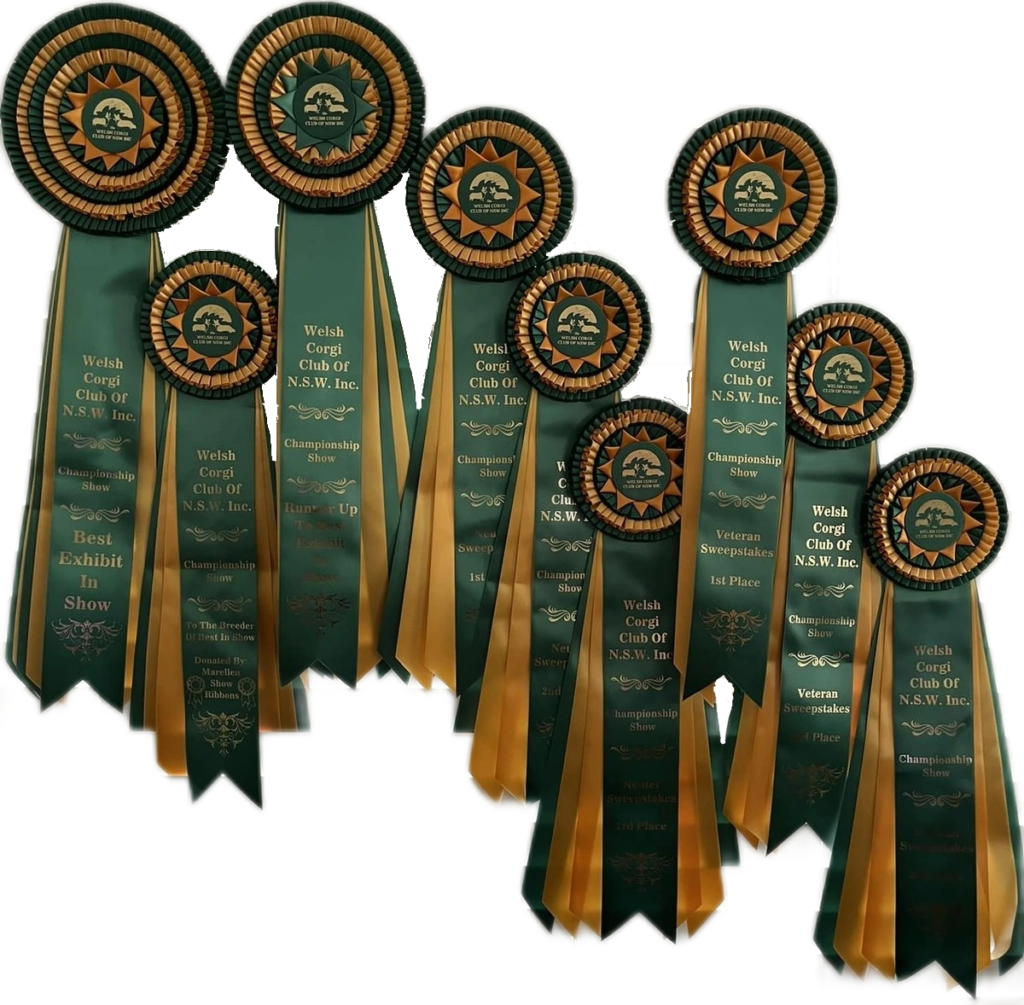
When showing your Cardigan or Pembroke in New South Wales, your Corgi will compete in Group 5, Working Dogs and in a class based on their age, show experience, or eligibility. Each class is defined by the ANKC rules and applies to all breeds, including Corgis.
👉 Note: Where separate classes are provided for each sex, the class numbers for bitches are followed by the letter “a” (for example, Baby Puppy Dog – Class 1; Baby Puppy Bitch – Class 1a).
Here are the classes you’ll see at NSW shows:
Conformation Shows are only open to those dogs who are registered with Dogs Australia on the Main register. 💡 Sometimes shows also run Sweepstakes (special classes), such as Baby Puppy, Veterans, or Neuter Exhibits. These are additional competitions and may vary from show to show.
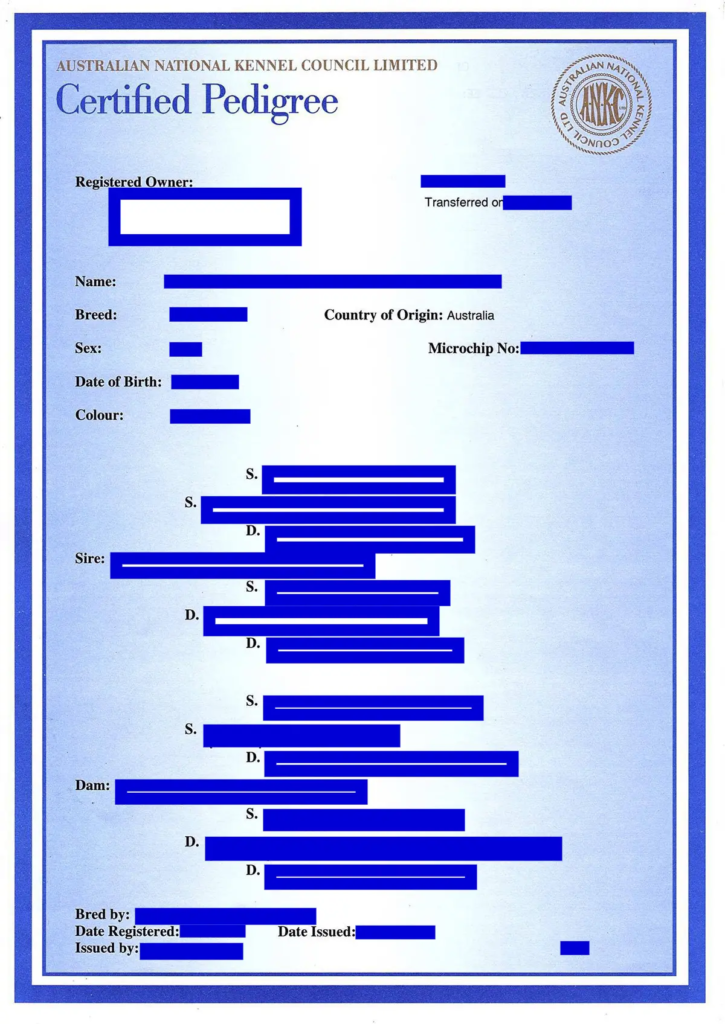
👉 If you’re unsure, ask the show secretary when entering — they’ll help you select the correct class for your Corgi.
In the show ring, Corgis are judged both gaiting and while standing in a correct “stack” — a balanced four-square position that shows off their structure. Judges also examine the dog by hand, feeling key points of their body to assess soundness and conformation.
Corgis can be shown from as young as three months old. Neutered dogs have their own competition pathway with a separate points system and titles, ensuring they are celebrated alongside entire dogs. The youngest competitors, known as Baby Puppies (under 6 months), can still take part in shows but are not eligible for championship points, so they are judged in their own classes.
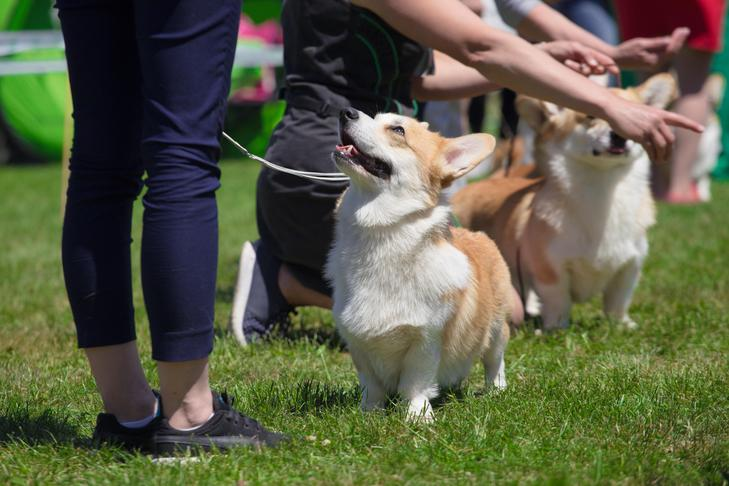
Most dog shows run alphabetically, so Cardigans & Pembrokes are among the last breeds of the Working Dog Group 5, so you’ll usually have some waiting time. Make sure you can hear the steward calling breeds and classes from where you sit, or check in at the ring occasionally to follow the progress. We are after the Swedish Vallhunds and the Shetland Sheepdogs are before that, so once you see the ‘Shelties’ you should move to the marshalling area near the exhibition ring (without blocking the entry/exit for other exhibitors) and be ready for your number to be called. Sometimes a roll call is taken while the previous class is still underway.
While waiting at ringside, observe how the classes are run:
When your number is called, respond clearly with “here” and enter the ring as directed. Exhibitors are called in catalogue order, and anyone who doesn’t answer after three calls will be marked absent and unable to compete — so keep alert and avoid distractions.
As seperate breeds Cardigans are judged separately to Pembrokes, with the Cardigans preceding the Pembrokes.
Once in the ring, always follow the judge’s instructions, and be polite to the steward, judge, and fellow exhibitors. The judge may ask your class to gait once around the ring together before stacking again. When gaiting alongside other exhibitors, leave about two metres between dogs.
When standing, Cardigans and Pembrokes are judged on a table and some show committees even provide a ramp for the dogs to walk up to the examination table. Each dog will be examined from nose to tail for correct structure, coat, and condition. You’ll also be asked to gait your dog individually so the judge can assess their movement.
 If it’s your first time showing, let the steward know. They’ll pass this on to the judge, who will usually allow some extra patience as you learn the ropes.
At Championship Shows, dogs compete for Challenge Certificates. The top male (Challenge Dog) and top female (Challenge Bitch) in each breed are awarded Challenge points. To earn the title Australian Champion, a dog must accumulate 100 Challenge points. Once achieved, this title stays with the dog for life, and the prefix “Ch.” is added to their registered name.
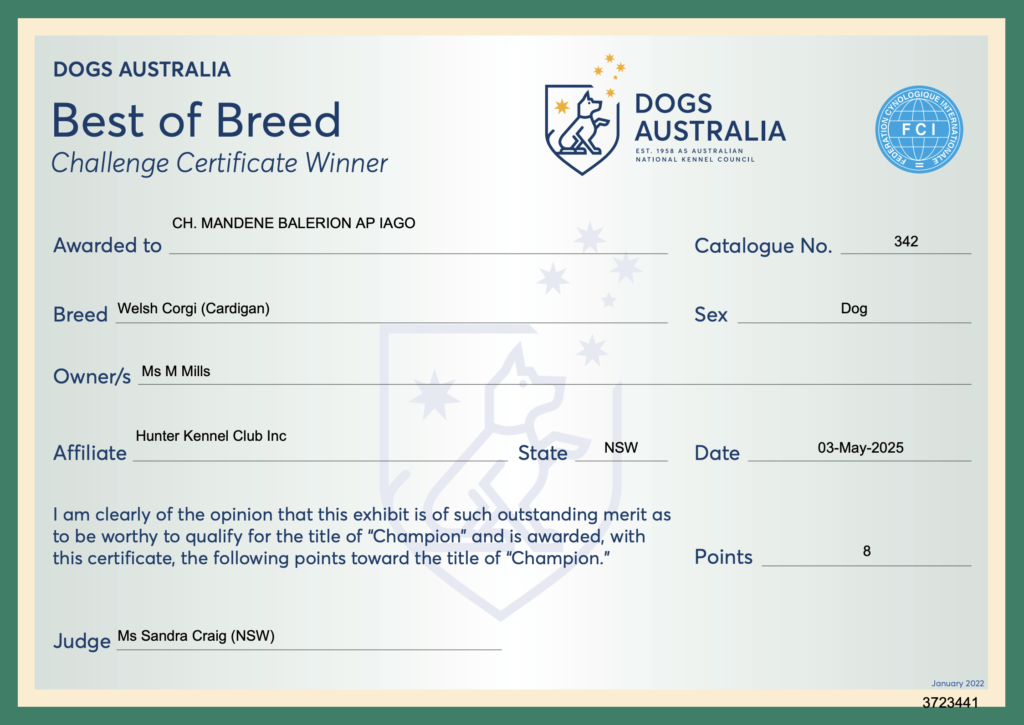
Judging order:
Both Best of Breed and Runner-Up Best of Breed automatically qualify for their respective Class in Breed awards.
After breed judging is complete, all Best of Breed winners in a group (for example, the Working Dog Group, which includes Corgis) enter the ring together to compete for Best in Group.
Best in Group and Runner-Up Best in Group also become automatic winners of their entered classes at group level. Remaining class winners then compete to determine each Class in Group (e.g. Puppy in Group, Junior in Group).
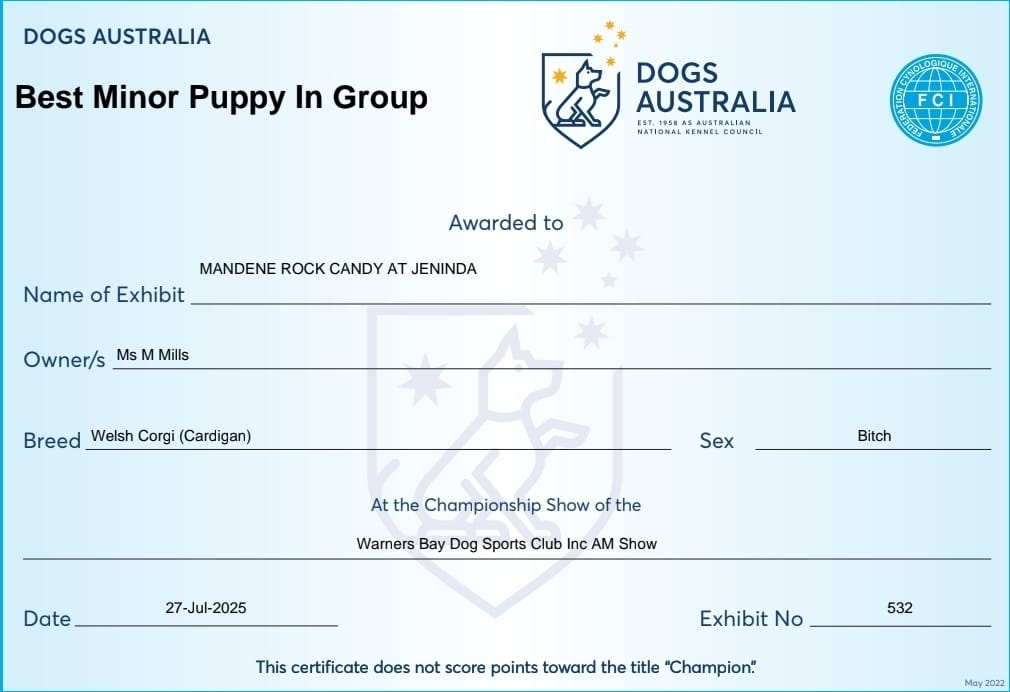
The climax of the show is the General Specials ring. Here, the seven Best in Group winners (one from each ANKC group) compete for the ultimate award: Best in Show.
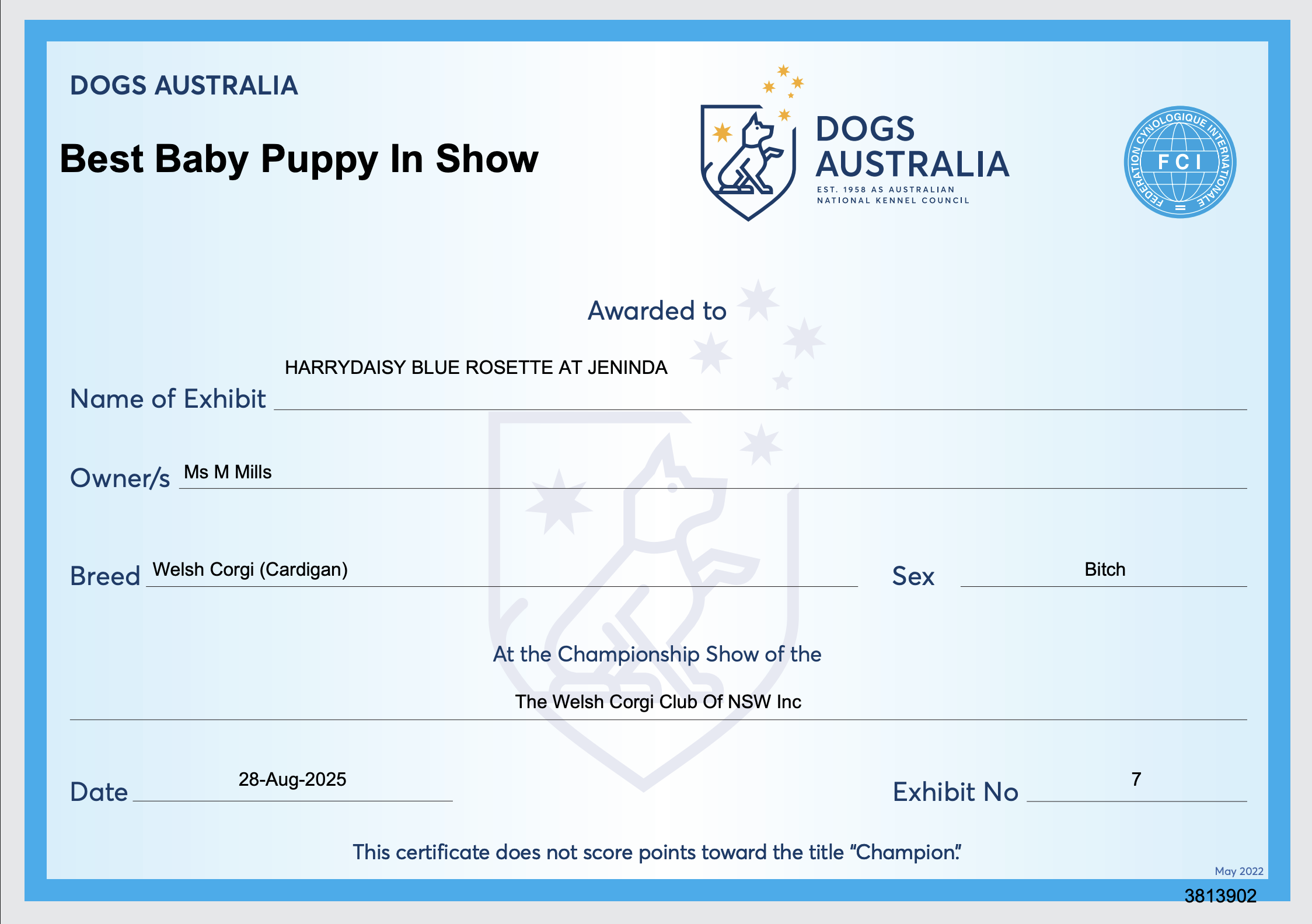
Showing your Corgi is much smoother (and far less stressful!) if you’re well prepared. Here’s a handy checklist to help you pack for the day:
✨🐾 For full rules and regulations, please see the Dogs Australia website.